Guide to Choosing Winter Work Jackets for Your Team


Cold weather can complicate even the best-laid plans. Equipment slows, tasks take longer and outdoor work becomes a test of endurance. For companies that rely on people who stay productive despite those challenges, keeping teams warm and protected is a matter of comfort and continuity.
Choosing winter work jackets is part of that equation. The right outerwear protects employees from unpredictable conditions and keeps everyone identifiable and professional through months of harsh weather. This guide outlines the factors you’ll want to consider when buying jackets for your team, including insulation, weather resistance, safety features and overall quality. Let’s jump right in!
Start With Climate, Workload and the Realities of the Job
Every worksite faces its own version of winter. A logistics yard in the Midwest, a service crew along the coast and a mountain event venue each require something different from their outerwear. The first step in choosing the right jacket is understanding what your team will face day after day.
Cold exposure alone doesn’t define a jacket’s performance. Wind, precipitation and movement levels determine how much insulation, waterproofing and flexibility your team actually needs. Employees who stay in constant motion may prefer lighter insulation paired with a weatherproof shell, while those standing for long stretches in open areas often need heavier fills that retain warmth without restricting movement. Building your program around those specifics keeps gear consistent in quality while still meeting the demands of each location.

Understand Insulation and What It Really Means
Warmth depends on more than thickness. The insulation inside a jacket determines how it performs when temperatures shift or conditions turn damp. Understanding these materials can help you choose the best winter work jackets to support every role on your team.
Down: Lightweight Warmth for Dry Conditions
Down insulation offers exceptional warmth without bulk, making it ideal for teams who spend long hours in cold, dry weather. The natural loft traps body heat efficiently, but it performs best when moisture isn’t a concern.
Synthetic Fills: Reliable in the Real World
Synthetic materials such as ThermoPlume® retain heat even when wet and dry quickly after washing. They’re suited for crews who face snow, slush or shifting weather patterns throughout the day. Synthetic fills also hold their shape after repeated wear, making them practical for daily uniform programs.
Fleece: Flexible Comfort for Active Work
Fleece provides breathable warmth that layers easily under a shell or soft shell jacket. It’s durable, easy to launder and excellent for teams who want a midweight option or prefer modular layering with sweatshirts and hoodies.
Don’t Overlook Weather Resistance
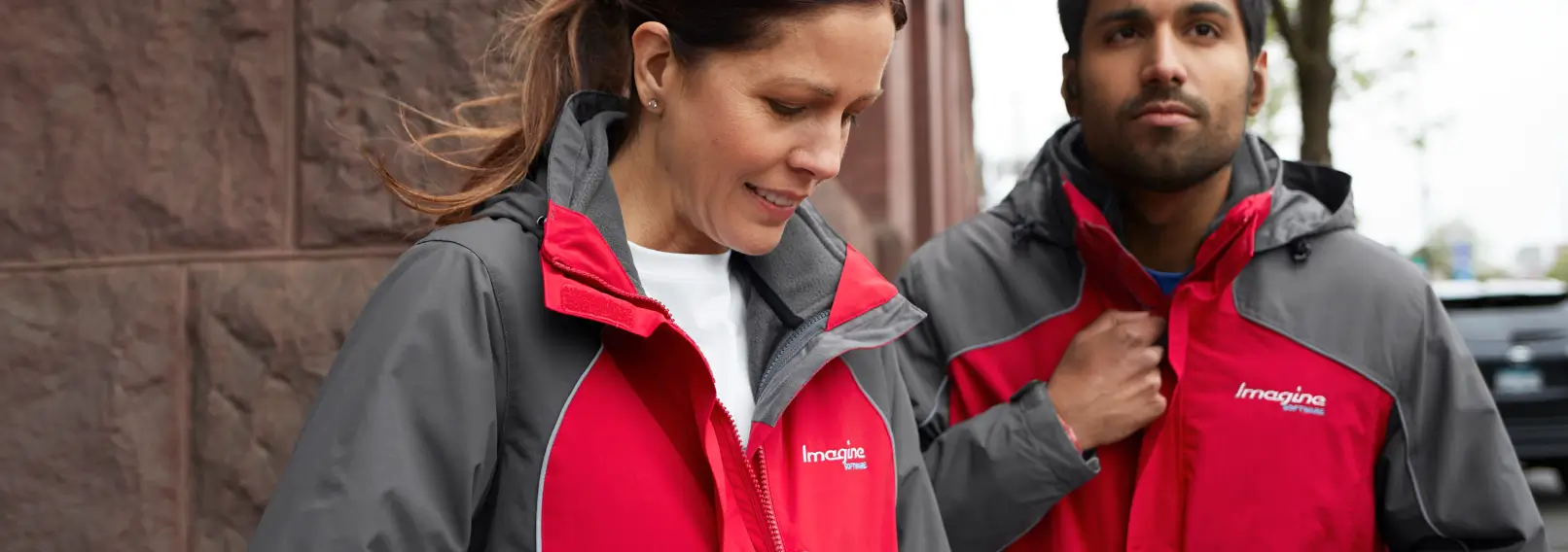
Cold isn’t the only challenge during winter. Moisture and wind can quickly undo even the best insulation, which is why weather resistance matters as much as warmth. The outer shell acts as the team’s first line of defense against rain, snow and wind, and its quality directly affects comfort and performance on the job.
Water Resistance vs. Waterproofing
These terms are often used interchangeably, but they serve different purposes. Water-resistant fabrics repel light precipitation and provide solid protection during routine outdoor work. Waterproof materials are produced for heavier exposure, often featuring sealed seams and coated layers that prevent leaks even in driving rain or snow.
Windproof Construction and Breathability
A strong shell needs to block wind without trapping heat. Look for materials that balance resistance and ventilation, keeping the body warm but not overheated during active tasks. Adjustable cuffs, drawcord hems and storm flaps further seal out drafts, improving comfort in unpredictable weather.
Seams, Flaps and Functional Details
Small details make a large difference in field conditions. Look for:
- Sealed or taped seams that block leaks
- Storm flaps that cover zippers and closures
- Adjustable hems and cuffs that prevent drafts
- Removable or adjustable hoods for variable weather
Every element contributes to a good work jacket’s durability and dependability. For a closer look at materials and weatherproofing factors to consider when buying a jacket, explore our guide on performance outerwear features to look for.
The Power of Layering: System Jackets and Adaptability
Winter doesn’t arrive all at once. Temperatures swing, conditions change and teams move between indoor and outdoor work throughout the day. A flexible outerwear system keeps everyone prepared without overcomplicating your uniform program.
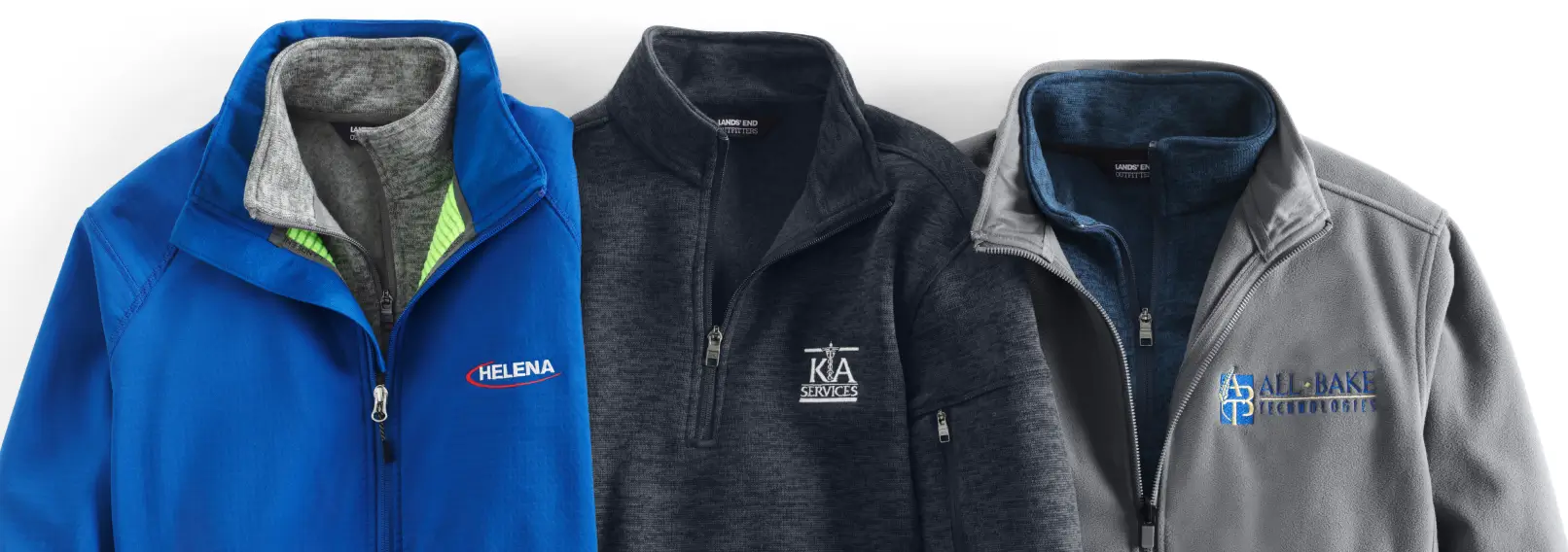
The Lands’ End System Jacket combines a weather-resistant shell with an insulated liner that can be worn together or separately. It’s a modular approach that helps standardize your outfitting while giving employees the freedom to adjust to the day’s demands.
A strong layering program works because it:
- Adapts to different climates across regions or job types
- Reduces inventory complexity with one versatile design
- Extends seasonal use by transitioning from cold to moderate weather
- Maintains consistency in color, embroidery and overall appearance
When employees can adjust layers instead of swapping entire garments, your winter uniform program becomes more practical, cost-efficient and easier to manage across multiple worksites. Combining insulated liners with waterproof shells and adding midweight pieces such as sweatshirts and hoodies or transitional vests helps fine-tune warmth without creating bulk.
Keep Safety and Visibility in Focus
Visibility and protection often go hand in hand. Teams that work near traffic, heavy equipment or in low-light areas need outerwear that stands out as clearly as it performs. A well-chosen, good work jacket should enhance safety compliance without compromising professionalism.
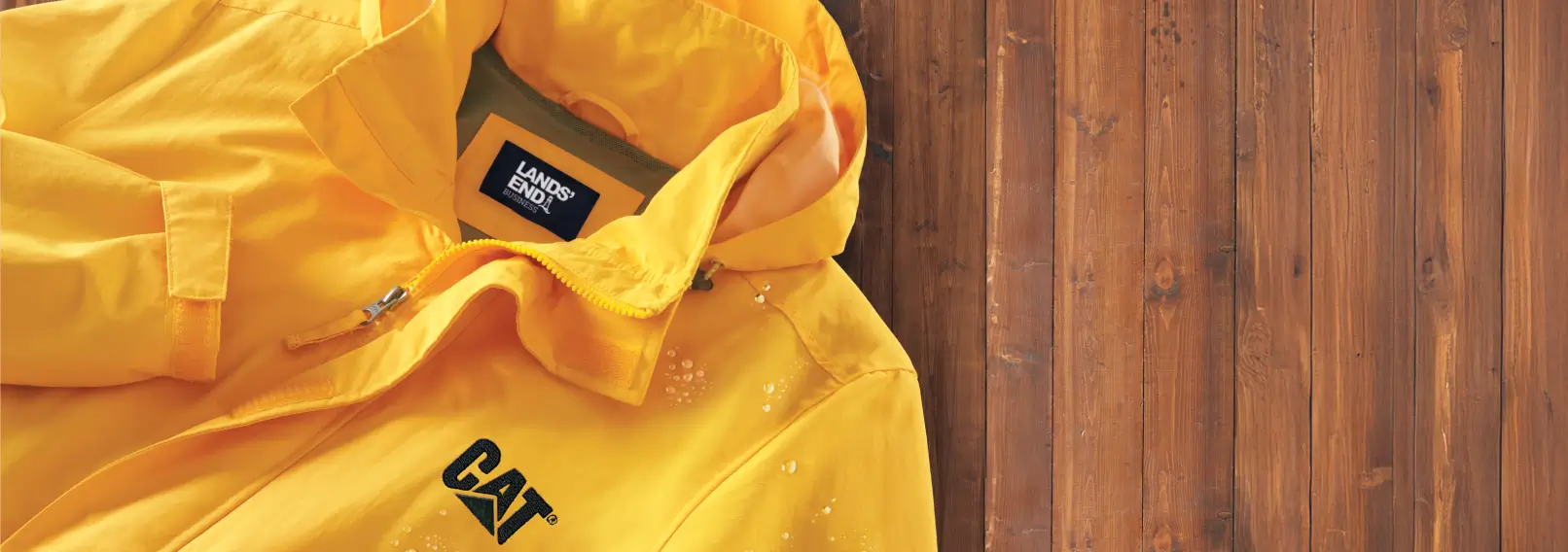
High-visibility colors such as safety yellow, bright orange and vivid lime keep employees noticeable in dim conditions or around moving vehicles. Reflective piping, trims and panels increase visibility during dawn or night shifts while maintaining a polished appearance suitable for client-facing work.
When safety apparel needs to align with company branding, Lands’ End Outfitters offers embroidery and logo placement that coordinate with high-visibility designs. Consistent color matching and durable threads ensure your branding looks clear and professional across every team member’s gear.

Durability and Functionality Pay Dividends
A jacket that can’t withstand daily wear won’t last a full season, much less a full program cycle. Durability is what keeps an investment performing long after the first winter. Look closely at materials, construction and maintenance requirements before committing to a style.
Heavy-duty fabrics such as nylon and polyester blends resist abrasion and tearing, which is essential in hands-on environments like construction sites or delivery routes. Reinforced seams and bar-tacked stress points prevent fraying in high-wear zones, extending the jacket’s service life.
Functionality also matters. The best winter work jackets balance protection with practicality:
- Multiple secure pockets keep tools, gloves and mobile devices accessible
- Two-way zippers improve range of motion and ventilation
- Storm cuffs and adjustable hems seal out cold air
- Ripstop weaves maintain structure even after minor snags
A durable jacket keeps teams comfortable, projects moving and brands visible all season long; it’s proof that practicality and professionalism work best when they’re built in.
Building a Cohesive Program
Finding the best winter work jackets for extreme cold is only part of the process. The larger goal is creating a uniform program that feels organized, consistent and easy to manage from season to season. A cohesive approach ensures that every employee, regardless of department or location, represents the same standard of professionalism.
Start With Sizing and Fit
A consistent appearance begins with options that work for everyone. Lands’ End Outfitters offers petite, tall, plus and big and tall sizes, ensuring comfort and polish across every role and department. Standardizing core styles helps prevent mismatched silhouettes and maintains a professional image across locations.
Keep Branding Consistent
Embroidery and logo placement are subtle details that carry real visual weight. Matching thread colors, logo dimensions and positioning across styles ensures a uniform look even when jackets differ by insulation or design. The embroidery used by Lands’ End Outfitters is stitched for durability, holding its shape and color through repeated washing and outdoor wear.
Simplify Management and Reordering
Program coordination is easier when employees can access approved styles in one place. Lands’ End Outfitters offers custom online ordering portals that allow teams to order, reorder and track updates without disrupting workflow. It’s a practical solution for maintaining brand consistency while adapting to seasonal or regional requirements.
A cohesive program does more than outfit a team; it organizes it. Uniformity in fit, branding and management builds a visible sense of reliability. When employees look aligned, it reflects an operation that runs the same way: confident and ready for any season.
Outfit Your Team for the Cold With the Best Winter Work Jackets From Lands’ End
The best winter work jackets for extreme cold work quietly. They keep people focused, projects moving and brands visible through cold, wind and snow. Choosing good work jackets now means fewer interruptions later: fewer replacements, fewer comfort complaints and a stronger sense of unity across your team.
Lands’ End Outfitters specializes in professional-grade outerwear that performs as dependably as the people wearing it. Explore our full selection of winter work jackets and vests, or connect with an Outfitter to start planning a program that works for every season ahead.
Get In TouchFrequently Asked Questions
What qualifies a jacket as a “winter work jacket”?
A winter work jacket combines insulation, weather resistance and practical features designed for active use in cold environments. It must hold warmth during low activity, allow movement during high activity and maintain durability across the season.
How should a winter work jacket fit?
A proper fit allows full range of motion without excess bulk. Employees should be able to bend, reach and lift comfortably while keeping cuffs, hems and collars sealed against wind exposure.
How often should winter work jackets be replaced?
Replacement cycles vary by workload and environment, but most teams benefit from reassessment every two to three years. Inspect for wear at seams, cuffs and zippers—these areas reveal performance decline long before insulation does.