Employee Wear-to-Work Trends 2026: What the Data Says About the Future of Business Uniforms

The rules of professional dress have been rewriting themselves for years now. In 2026, those rewrites are accelerating. The global workwear market is projected to exceed $20 billion this year and is on track to surpass $30 billion by 2033, growing at roughly 5% annually. Behind those numbers is a clear signal: businesses are spending more on employee attire because the stakes (brand perception, retention, comfort, sustainability) have never been higher.
So, what does the landscape of workwear trends 2026 look like for the companies placing those orders? Less rigid. More intentional. And backed by more employee input than any cycle before. Here are the shifts HR managers, procurement teams and brand leaders should have on their radar as they plan uniform strategies for the year ahead.
1. Sustainability Has Moved from Talking Point to Table Stakes
If 2025 was the year companies started asking about eco-friendly uniforms, 2026 is the year they started requiring them. A 2019 industry report found that 73% of employees believe companies should prioritize eco-friendly workwear options, and businesses are listening.
The conversation has matured well past organic cotton and recycled polyester (though both remain foundational). The real movement in modern workwear trends 2026 is happening in closed-loop uniform programs: structured systems where end-of-life garments are collected, broken down and reprocessed into new textiles rather than routed to landfills. Considering that the Ellen MacArthur Foundation estimates the equivalent of a garbage truck of textiles is landfilled or incinerated every second globally, closed-loop systems for corporate uniforms represent a meaningful and measurable intervention.
Materials innovation is keeping up, too. TENCEL™ Lyocell (produced from sustainably sourced wood pulp in a closed-loop manufacturing process), bio-based nylons and water-saving dyeing techniques are moving from pilot programs into standard catalogs. Meanwhile, Lands’ End Outfitters continues to explore sustainable materials and responsible sourcing practices as part of our broader commitment to quality and longevity. We believe a uniform that lasts longer is, by definition, a more sustainable one.
What to do now: Ask your uniform provider about end-of-life garment programs, recycled-content certifications and packaging sustainability. If they can’t answer those questions clearly, it may be time to explore partners who can.
2. The Hybrid Uniform: Ready for the Office, the Home and Everywhere Between
The hybrid work model isn’t a trend anymore. It’s infrastructure. And it has fundamentally changed what work clothing needs to accomplish. Research from Novoresume’s 2026 workplace data found that remote work increased the likelihood of job satisfaction by 67%, even as it boosted job stress by 26%. Employees bouncing among home offices, conference rooms and client sites need apparel that handles all those contexts without a wardrobe change.
This is one of the defining 2026 wear-to-work trends: garments engineered for versatility. Stretch fabrics, moisture-wicking technologies, wrinkle-resistant finishes and lightweight layering systems have become baseline expectations rather than premium upgrades. The goal is a polished look that holds up under a laptop camera at 9 a.m. and still feels comfortable during a cross-town commute at 5 p.m.
The Rise of Strategic Layering
We continue to see both casual and tailored layers perform significantly well. The core theme for 2026 is “Dressing up, but comfort is still key.” This trend manifests in versatile pieces that can be added or removed to suit any environment. Think of:
Casual Layers | Comfortable sweats and durable fleece that can be thrown on for a commute or a cool office.
Tailored Layers | Sophisticated blazers, elegant sweaters and professional quarter-zips that instantly elevate a look for a client meeting, all designed with easy-care, stretch-knit fabrics.
A Nod to Heritage, Texture and Pattern
This year’s workwear fashion trends also embrace a sense of personality and polish.
We are seeing a strategic return to heritage styles. Our new Rugby shirts and unisex Sweater Vests are perfect examples of this 90s-inspired trend, offering a classic, preppy look that feels both professional and modern.
Textures and patterns are also on the rise. Look for more visual interest in fabrics, from subtle textures that add depth to classic pieces to timeless patterns like stripes. Even traditionally formal items are being updated with softer materials and refined detailing.
Across both women’s wear-to-work trends for 2026 and men’s, the theme is consistent: tailored fits with ergonomic stretch and relaxed silhouettes that read as polished without feeling stiff. It’s a move toward structured pieces that feel as comfortable as they look.
The rise of “corpcore,” blending traditional office staples with relaxed, modern touches, continues to affect how uniform programs are constructed. Companies are moving away from rigid single-look mandates and toward curated capsule wardrobes that give employees options within a cohesive brand framework.
What to do now: Audit your current uniform program for hybrid readiness. If your team’s uniforms only work in one setting, you’re likely hearing about it.
3. Performance Fabrics and Smart Materials Go Mainstream
At Lands’ End, our internal data for 2026 shows a clear and growing demand for performance fabrics and elevated, solution-driven materials. Technology in workwear is no longer limited to specialized safety gear. Instead, it’s about providing tangible solutions for the modern employee.
Proprietary technologies like our moisture-wicking, rapid-dry finishes, no-iron treatments and antimicrobial technologies have crossed over into everyday corporate apparel. Lands’ End waterproof and soft shell jacket options, for example, use advanced weatherproof construction that suits both outdoor work and urban commuting, while maintaining a clean, professional silhouette.
Four-way stretch fabrics are becoming standard across categories, from polos and button-downs to trousers and outerwear, because they solve a practical problem: employees who are comfortable perform better. Research from the University of Oxford found that satisfied employees are up to 31% more productive, and a separate study by Coventry University found that well-fitting, well-designed uniforms can increase employee happiness by as much as 22%. Fabric technology is the invisible engine behind those gains.
What to do now: Prioritize performance features in your next uniform refresh. Look for moisture-wicking, stretch, wrinkle resistance and easy-care finishes as baseline requirements.
4. Customization and Personalization Are Getting Smarter
The era of “one logo, one polo, one size chart” is fading. Among the most significant modern workwear trends, 2026 is the growth of nuanced customization, not just in branding, but in fit, fabric weight and individual employee preferences.
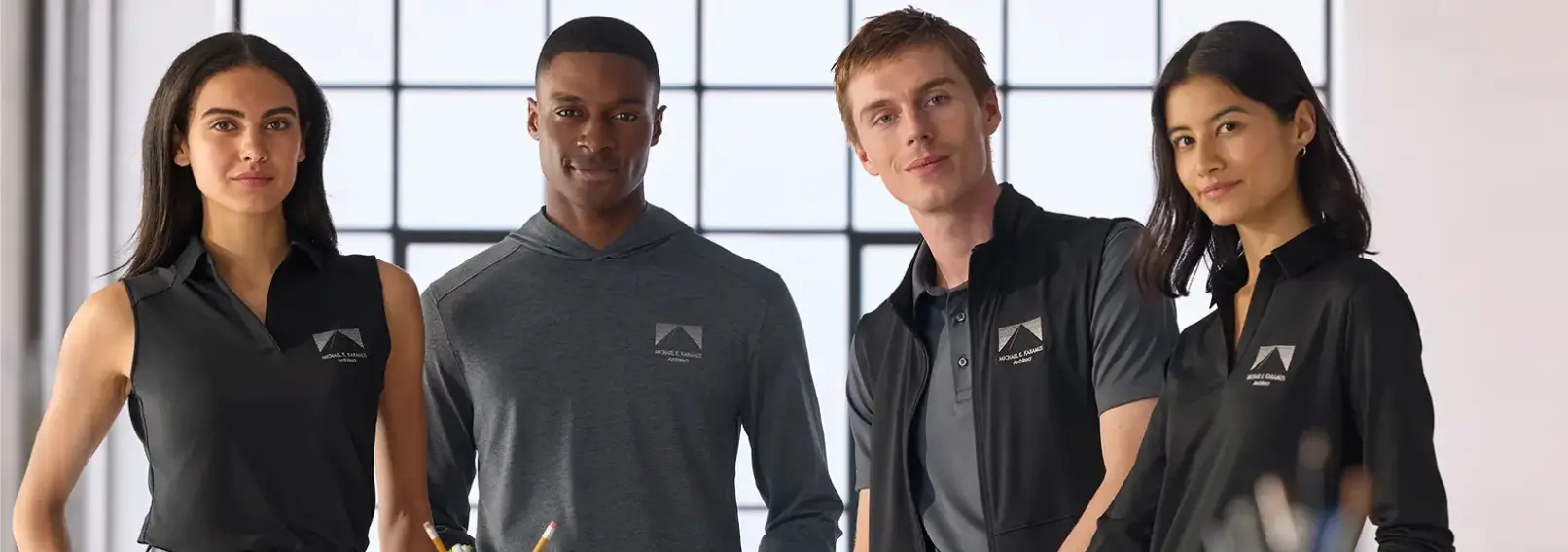
Embroidered logos and branded trims remain the foundation, but companies are now layering in options like individualized name badges, department-specific color accents and role-based garment selections. The underlying shift is from “uniform as constraint” to “uniform as curated wardrobe,” where employees have meaningful choices within a defined brand system.
On-demand production is also gaining ground. Rather than ordering massive bulk runs and warehousing surplus inventory, companies are moving toward just-in-time manufacturing models that produce what’s needed, when it’s needed. This reduces waste, eliminates dead stock and makes it easier to accommodate new hires, size exchanges and seasonal updates without the logistical headache.
Lands’ End Outfitters’ no-minimum ordering model supports this direction, allowing a 10-person startup and a 1,000-employee enterprise to operate with the same flexibility. Paired with centralized online company stores where employees can order approved items directly, this approach turns uniform management from an administrative burden into a streamlined, self-service system.
What to do now: Explore managed uniform platforms that offer employee self-service ordering, real-time inventory visibility and flexible customization options. Or get in touch with a Lands’ End Outfitters program manager.
5. Inclusivity Is No Longer Optional
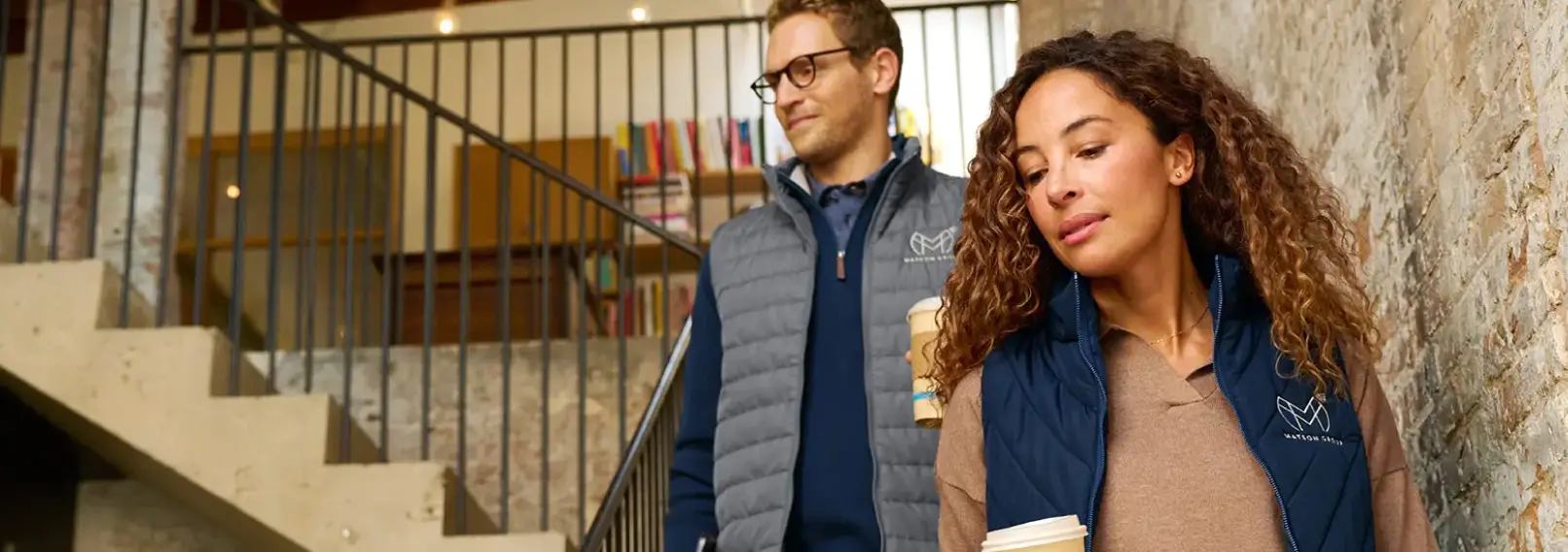
If your uniform program still tops out at XL or offers only traditionally gendered cuts, 2026 is the year to fix that. Inclusivity in workwear has moved from a “nice-to-have” aspiration to a baseline expectation, and the data supports why.
The workwear market’s fastest-growing segment by category is women’s apparel, driven by increasing workforce participation and long-overdue attention to fit, function and style for female employees. At the same time, demand for gender-neutral options and expanded size ranges is rising across industries, from hospitality and healthcare to corporate offices and retail.
Lands’ End Outfitters offers sizing from XS to 5XL, with petite, regular, tall and big-and-tall options, along with adaptive closures (magnetic snaps, side-zip polos) designed for employees with mobility needs. It’s a practical acknowledgment that bodies are different, jobs are different and a uniform that doesn’t fit is a uniform that doesn’t get worn or worn well.
Cultural inclusivity matters too. Companies with global or diverse workforces are rethinking garment choices to accommodate religious dress requirements, climate variations and cultural norms without creating a patchwork of exceptions. The best programs build flexibility into the system from the start, so accommodation is the default rather than the afterthought.
What to do now: Review your size range, fit options and accommodation policies. Gather feedback from employees about what’s working and what isn’t. A uniform that makes someone feel excluded is worse than no uniform at all.
6. Bold Branding Meets Relaxed Design
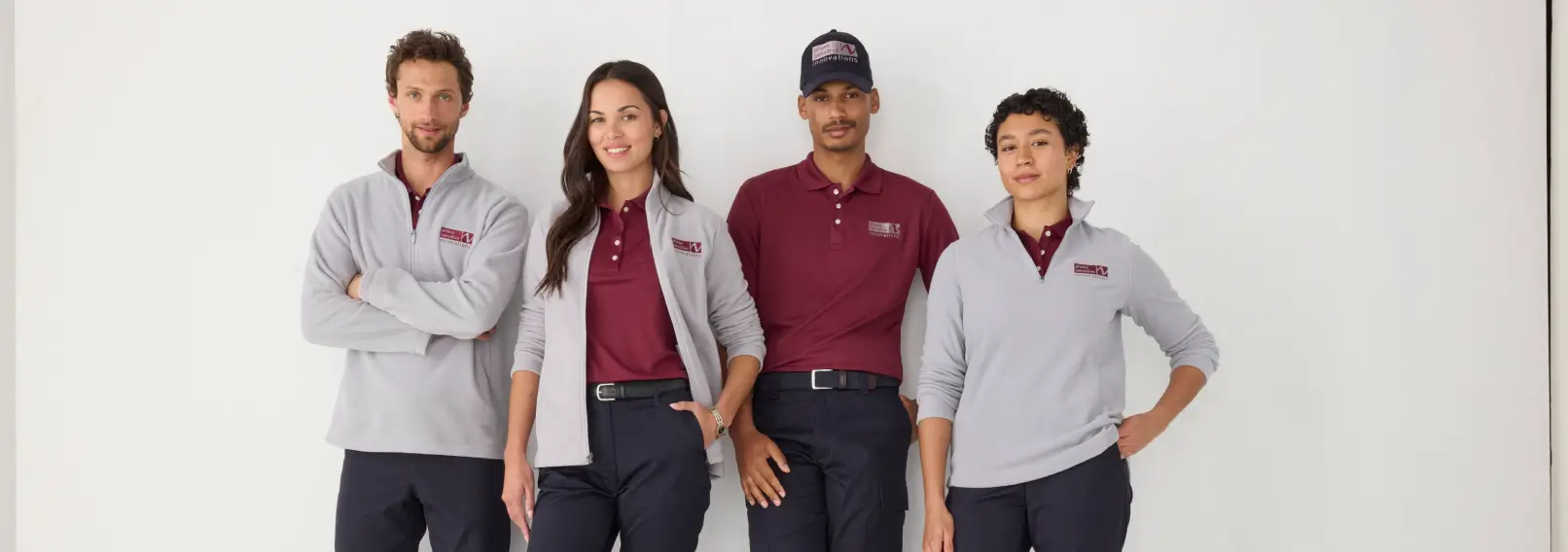
Workwear fashion trends for 2026 are defined by a specific aesthetic tension: companies want their branding to be visible and cohesive, but they also want garments that feel modern and approachable rather than corporate and rigid. It’s a move toward refined logo placement, subtle brand integration and contemporary color palettes.
Muted earth tones, soft neutrals and deep navies are replacing the overly bright, overly saturated palettes of previous years. Custom embroidery and branding elements are getting more sophisticated; think tonal logo treatments, branded interior labels and subtle trim accents that reinforce identity without overwhelming the garment.
Relaxed tailoring is the throughline. Across both men’s and women’s categories, the silhouette in 2026 is softer, with more room to move, fabrics that drape naturally and construction that looks sharp without feeling constricting. It’s polished, but human.
What to do now: For companies refreshing their uniform identity, this is an opportunity to signal that your brand is evolving. A thoughtful uniform update communicates that your organization values employee comfort.
Choosing the Right Partner for 2026
A uniform program is only as strong as the provider behind it. As wear-to-work trends in 2026 demand more from fabric technology, sustainability, customization and inclusivity, the gap between a basic supplier and a strategic partner widens.
Look for a provider that offers high-quality, sustainable options with a proven track record. One that can handle customization at scale, support a streamlined ordering process and provide reliable fulfillment whether you’re outfitting five people or 5,000. And critically, one that understands your industry well enough to recommend solutions you hadn’t considered.
When rolling out updated uniforms, clear communication with your team matters. Explain the reasoning behind changes, whether it’s sustainability goals, comfort improvements or brand alignment. Gather feedback during the process. Employees who feel consulted are far more likely to wear the result with pride.
About Lands’ End Outfitters
Lands’ End Outfitters is the business division of Lands’ End, helping companies of every size outfit their teams with custom, high-quality workwear. We offer managed uniform programs, logo customization, inclusive sizing and sustainable fabric options, all with no order minimums.
Get Started with a Managed Uniform Program
The businesses that stay ahead in 2026 won’t be the ones still debating whether to update their workwear. They’ll be the ones who already did. If the trends in this article have you rethinking your current program, that instinct is worth acting on. Connect with a Lands’ End Outfitters uniform expert, and start building a program your team will actually want to wear.
Connect With a Lands’ End Outfitters Program ManagerFrequently Asked Questions
How often should a company refresh its uniform program?
Most uniform programs benefit from a review every two to three years, with minor updates (color refreshes, new seasonal layers, updated branding) happening annually. If your current uniforms predate the shift to hybrid work or haven't kept pace with your brand identity, that's a strong signal to move sooner rather than later.
Are there tax benefits to providing employee uniforms?
In many cases, yes. Employer-provided uniforms that are required as a condition of employment and not suitable for everyday wear are generally tax-deductible as a business expense. Uniform stipends and allowances may also qualify, though the specifics vary by state and employment classification. Consult your tax advisor for guidance tailored to your situation.
What's the difference between a managed uniform program and ordering in bulk?
A managed program is an ongoing service relationship. Your provider handles inventory management, employee ordering portals, logo customization, fulfillment and replenishment on a rolling basis. Bulk ordering is a one-time transaction that leaves warehousing, distribution and reordering in your hands. For companies with more than a handful of employees, managed programs tend to save significant time and reduce waste from overstock.